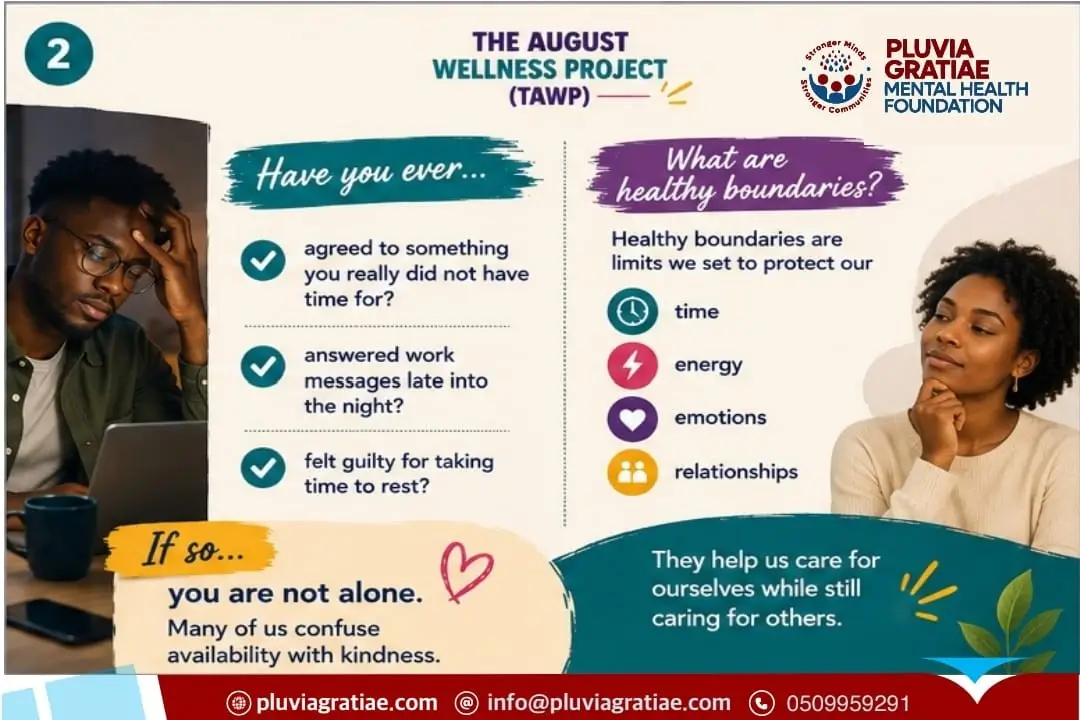
Healthy boundaries are not walls. They are the quiet lines that help us protect our wellbeing while staying connected to the people who matter.
There is a particular kind of exhaustion that comes from constantly being available.
You say yes when you want to say no. You respond to messages long after the workday has ended. You take on responsibilities that were never really yours. You make time for everyone else, only to realise that there is very little time left for yourself.
Over time, these seemingly small choices can take a toll on our mental and emotional wellbeing.
This is where healthy boundaries come in.
Boundaries are not about pushing people away, becoming selfish, or refusing to help others. They are about recognising your limits and communicating them in healthy ways. They allow us to care for others without continually neglecting ourselves.
And the good news is that building healthier boundaries does not require dramatic changes. It often begins with small, intentional choices.
Here are five practical habits you can start practising today.
1. Pause Before Saying “Yes”
Not every request needs an immediate answer.
Sometimes, we say yes before we have even had time to consider whether we actually have the time, energy, or capacity to take something else on. We may agree because we feel guilty, fear disappointing someone, or simply want to be helpful.
But constantly saying yes can leave us overwhelmed and resentful.
The next time someone asks you to take on a task, attend an event, provide a favour, or give your time, give yourself permission to pause.
You might simply say:
“Let me check my schedule and get back to you.”
That short sentence creates space for you to think before making a commitment. Ask yourself:
- Do I genuinely have the time for this?
- Do I have the emotional or physical energy?
- Is this something I actually want to do?
- What will I have to give up if I say yes?
Remember, every “yes” should be a choice, not an obligation.
Learning to pause does not make you unhelpful. It helps you make more honest commitments.
2. Protect One Hour Every Day for Yourself
When life becomes busy, personal time is often the first thing we sacrifice.
Work needs attention. Family needs attention. Friends need attention. Messages need responses. Errands need to be done. And somewhere in the middle of all of this, we can forget to take care of ourselves.
Setting aside even one hour each day can create an important space to slow down, recharge, and reconnect with yourself.
That hour does not have to look a certain way. It could be used to:
- Rest or take a nap
- Read a book
- Pray or meditate
- Exercise
- Journal
- Listen to music
- Take a quiet walk
- Sit without your phone or other distractions
The goal is not productivity. The goal is to give yourself permission to simply be.
You do not always have to be achieving something to make your time valuable. Protecting personal time sends an important message to yourself: my wellbeing matters too.
3. Communicate Your Limits Respectfully
A boundary that is never communicated can be difficult for others to understand.
People cannot always know what you need, what makes you uncomfortable, or where your limits are unless you tell them. Healthy boundaries therefore require honest communication.
This does not mean being rude or aggressive. In many situations, a boundary can be communicated calmly and respectfully.
Instead of saying:
“You are always disturbing me.”
You might say:
“I need some quiet time after work, so I may not always be available in the evenings.”
Instead of agreeing to a deadline you know you cannot meet, you could say:
“I won't be able to complete this by tomorrow, but I can have it ready by Friday.”
Clear communication helps reduce misunderstandings and prevents you from repeatedly committing to things you cannot realistically manage.
And remember: being honest about your limits is not the same as being unkind. In fact, healthy boundaries can strengthen relationships because they encourage honesty, clarity, and mutual respect.
4. Reduce Unnecessary Digital Interruptions
Our phones have made it easier than ever to stay connected. But being constantly connected can also mean being constantly interrupted.
A notification appears. A message comes in. An email arrives. Someone calls. Another social media update demands our attention. Even when each interruption seems insignificant, the constant switching of attention can leave us feeling mentally drained.
Creating digital boundaries can therefore be an important part of protecting your mental wellbeing.
You could start with a few simple changes:
- Turn off notifications that are not essential.
- Avoid checking work emails outside working hours where possible.
- Create phone-free periods during meals.
- Put your phone away before bedtime.
- Give yourself uninterrupted time to focus on one thing at a time.
You do not have to disconnect from technology completely. Instead, take back some control over when and how technology gets your attention.
Your attention is valuable. Protecting it is another way of protecting yourself.
5. Remember: You Do Not Have to Earn Rest
Perhaps one of the most difficult boundaries to establish is the boundary around rest.
Many of us have learned to think of rest as something we deserve only after everything has been completed.
- "I'll rest when I'm finished."
- "I'll sleep after I get this done."
- "I'll take a break when things calm down."
But there will almost always be another task waiting. If we make rest dependent on having nothing left to do, we may never get enough of it.
Rest is not a reward for productivity. It is a basic human need.
Your body and mind need time to recover. Taking a break does not mean you are lazy, unmotivated, or falling behind. It means you recognise that you cannot give your best when you are constantly running on empty.
Sometimes, the healthiest thing you can do is stop.
Take a breath.
Close the laptop.
Put down the phone.
Go to bed.
Sit quietly.
Give yourself permission to recover.
Rest is not the opposite of wellbeing. Rest is part of wellbeing.
Start Small
Building healthy boundaries is not something that happens overnight.
You may feel uncomfortable the first time you say no. You may worry that someone will misunderstand you. You may even feel guilty for prioritising yourself. That is normal.
Healthy boundaries are a skill, and like any skill, they become easier with practice. You do not need to change everything at once.
This week, try one small step.
Pause before saying yes.
Protect one hour for yourself.
Tell someone what you need.
Put your phone away for a while.
Or simply give yourself permission to rest without feeling guilty.
Small choices can create meaningful changes over time. Because taking care of your mental wellbeing is not selfish. It is a responsibility to yourself—and it can also help you show up more fully for the people and commitments that matter most.

Abishag Kohl
Committed to empowering minds, fostering hope, and building resilience in Ghana through community outreach, education, and compassionate mental health advocacy.