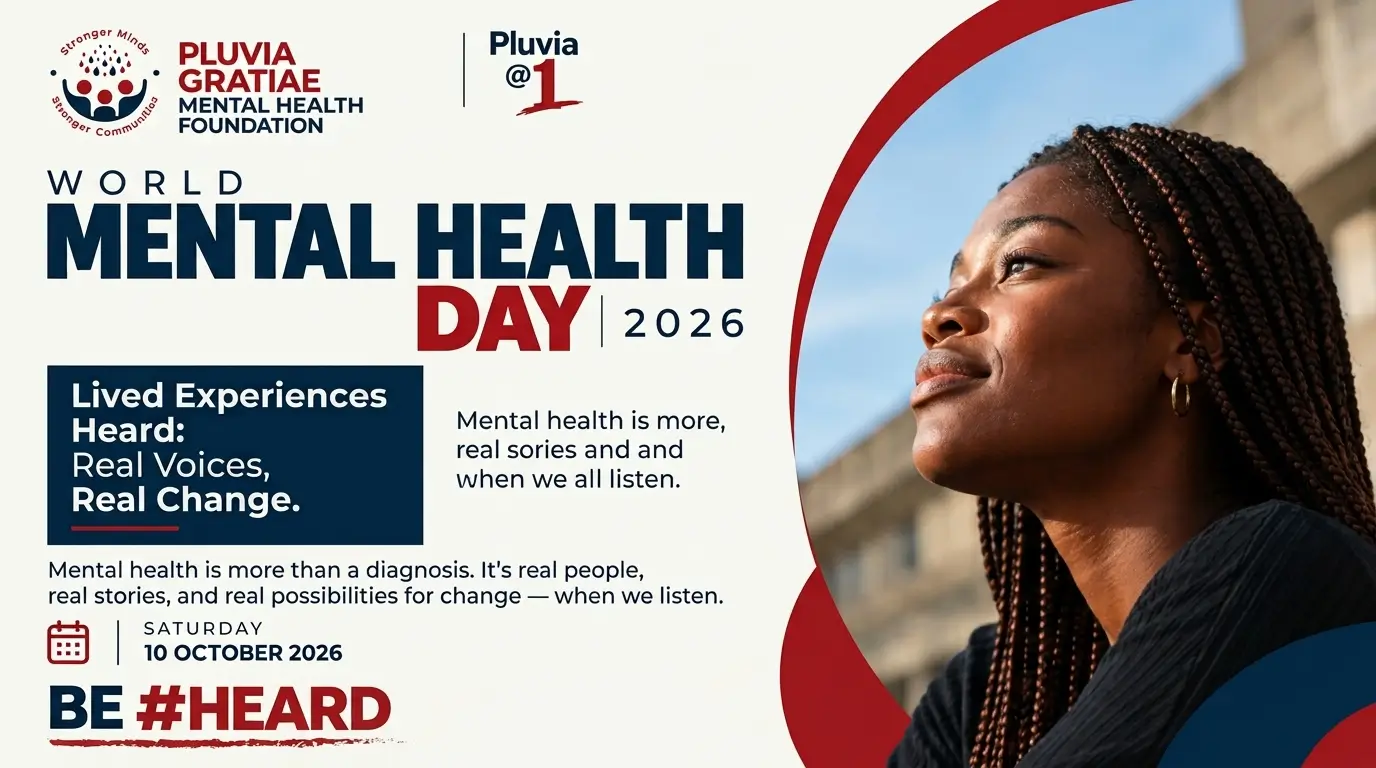
This October, Pluvia Gratiae Mental Health Foundation (PGMF) celebrates its first anniversary and joins the global conversation around World Mental Health Day 2026. The theme for this year's World Mental Health Day is “Lived Experiences Heard: Real Voices, Real Change.” For Pluvia, this theme presents an opportunity to ask a question that goes beyond awareness:
What happens when we don't just talk about mental health, but really listen to the people who live it?
This question is at the heart of HEARD Campaign — Real Voices. Real Mental Health. Real Change - Pluvia's October 2026 campaign.
At a time when mental health is increasingly discussed in public spaces, there is a danger that we become comfortable with talking about mental health without necessarily becoming better at understanding it.
Mental Illness Is More Than We Think
For many people, the phrase mental illness still evokes a very narrow image; the most visible and severe manifestations of the illness or behaviour that has become difficult to ignore. But mental illness is much broader than these images.
Mental illnesses can affect how people think, feel, perceive the world, behave and function in their everyday lives. They also vary considerably in their nature and severity. How we understand mental illness influences how we respond to it. If our understanding is based primarily on stereotypes, we may overlook early signs, misunderstand behaviour and respond with fear rather than compassion.
A Diagnosis Describes a Condition, NOT a Person
Diagnoses are names given to conditions based on patterns of symptoms and experiences. They help professionals understand and manage health conditions. They are not meant to become the identities of the persons living with those conditions. When we talk about mental illness without taking time to understand these, we risk defining people by their conditions and thereby deepening the very stigma we are trying so hard to reduce.
Seeking Help Should Not Begin with Fear
Stigma can affect people's willingness to seek care. For some, this can develop into a deep fear; fear of receiving a diagnosis, being hospitalised, taking medication, being judged or worrying about what others will think. These fears can keep people from seeking help for years. Yet seeking help can be an opportunity to understand what is happening and identify what support a person needs.
When it comes to the service, mental health care should be a partnership in which the person receiving care is treated with dignity and, wherever possible, involved in decisions about their treatment and recovery. A mental health service may be clinically sound, but if people receiving care feel dismissed, frightened, judged or excluded from decisions about their own care, then we must ask whether we are truly providing person-centred mental healthcare.
The Question at The Heart of The Matter
One of the most important questions raised by the Pluvia’s HEARD Campaign is
“Is being given a platform to speak the same as being heard?”
A person with lived experience may be invited to tell their story, interviewed about their experience or asked what they think about a service. But what happens afterwards? Does anything change? Do their experiences influence how services are designed? Do they contribute to professional education, research or policy? Do they affect decisions about their own care?
Lived experience is more than a personal story. It is a form of expertise gained from navigating mental illness, treatment, recovery, relationships, families, communities and mental-health systems. This knowledge can complement clinical and professional expertise and help shape services that are more responsive to the people they serve.
If We Truly Listen, What Needs to Change?
If we genuinely listen to people with lived experience, we may discover that change is needed at several levels.
Mental-health professionals may need to improve communication and shared decision-making. Families may need greater understanding and support. Communities must challenge stigma and reconsider how they respond when someone becomes mentally unwell, while mental-health services must become more accessible, responsive and continuous.
Society must also recognise that recovery is not simply the absence of symptoms. It includes dignity, relationships, participation and the opportunity to live a meaningful life. But most importantly, people with lived experience must have meaningful opportunities to contribute and influence the decisions and systems that affect them.
If decisions are made about people without meaningfully listening to them, we risk designing systems that are clinically informed but not fully responsive to people's lives.
Why HEARD Matters to Pluvia
For PGMF, this conversation is particularly meaningful as we celebrate our first anniversary. Our first year has reinforced something we strongly believe; Improving Mental Health care is not simply about providing information. It is about listening, building understanding, challenging stigma and creating space for people to participate meaningfully in the issues that affect their lives.
Pluvia’s HEARD Campaign is therefore more than an October and anniversary campaign; It is an invitation to think differently about what it means to really listen. As Pluvia Gratiae Mental Health Foundation celebrates its first anniversary, HEARD is both a reflection on what we have learned and a call to action. Listening should be more than allowing people to speak. It should mean taking their experiences seriously, learning from them and allowing what we hear to influence what happens next.
Pluvia’s HEARD Campaign: Real Voices. Real Mental Health. Real Change.
Pluvia @ 1 | October 2026

Prof. Pinaman Appau
Consultant Psychiatrist with over 15 years of clinical practice, academic instruction and high-level administration.