We’ve all heard it before. Someone is acting a bit "off," perhaps staying in bed for days or speaking to themselves in a moment of deep distress and the first whisper in the neighborhood is, "Oh, it’s a spiritual attack." Or maybe, "He’s been smoking too much of that 'wee'." In many of our Ghanaian and African homes, mental health is the guest no one invited and everyone wants to ignore. We have names for everything else, malaria, typhoid, even the flu, but when it comes to the mind, we suddenly lose our vocabulary.
But here’s the reality: your mind can get "sick" too. And just like you wouldn’t tell someone with a broken leg to just "pray it away" or "be a man," we cannot expect people struggling with their mental well-being to simply "get over it."
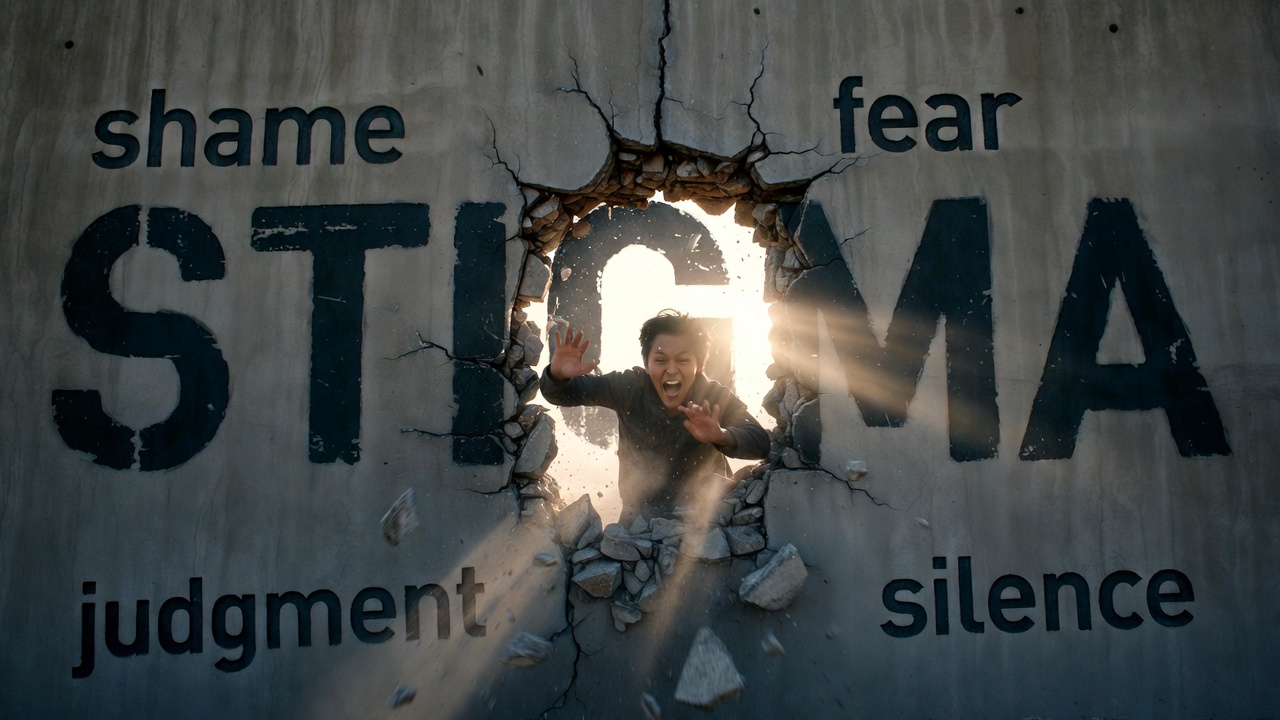
Ending the stigma isn't just a fancy medical goal; it’s about making sure our brothers, sisters and friends don't have to suffer in the shadows. Let’s dive into how we can change the narrative, African style.
1. The "Strong Man" Myth and the "Quiet Woman" Trap
In our setting, there is an immense pressure to be "strong." For men, this often means showing no signs weakness. If a man cries or admits he’s feeling overwhelmed, he’s sometimes viewed as less of a man. For women, the "virtuous woman" is often the one who suffers in silence, carrying the weight of the world without a single complaint.
The Fix: We need to redefine strength. True strength isn't the absence of struggle; it’s the courage to admit when the load is too heavy.
- For the Brothers: Talking about your feelings doesn't make you "weak." It makes you a leader who values his health.
- For the Sisters: You are not a "superwoman" if you burn out. Rest is a necessity, not a luxury.

2. Spiritualizing the Biological
Religion is the backbone of our community. We go to church, we go to the mosque and we find deep comfort in our faith. However, a major hurdle in ending stigma is the habit of labeling every mental health struggle as a "demon" or a "curse."
While faith is a powerful tool for healing, it should work hand-in-hand with science. You can pray for your high blood pressure, but you still take your tablets, right? Mental health is no different.
Note: Therapy and prayer are not enemies. They are partners. God gave us doctors and therapists for a reason.
3. Change Your Language (Watch Your Mouth!)
The words we use in our local dialects often carry heavy stigma. Words like "abodam" or "bodamfo" (in Twi) or similar terms in Ga, Ewe, or Hausa are often thrown around as insults. When we use the language of "madness" to describe someone’s pain, we build a wall that prevents them from seeking help.
Practical Step: Instead of saying, "That guy is crazy," try saying, "He seems to be going through a very difficult time." Language shapes our reality. If we use empathetic words, we create an empathetic environment.
4. How to Support a Friend (The "Kelewele" Approach)
- Sometimes, the best way to help someone isn't a long lecture; it’s just being there. Think of it like sharing a bowl of kelewele: it’s warm, it’s comforting and it brings people together.
- Listen without judging: You don't always need to provide a solution. Sometimes, just saying, "I’m here and I hear you," is enough.
- Check-in regularly: Don't wait for the "big" crisis. A simple "How are you really doing today?" can be a lifeline.
- Offer practical help: If someone is depressed, they might not have the energy to cook or clean. Bringing them a meal or helping with a small chore speaks louder than a thousand "get well" messages.

5. Normalizing Professional Help
In many circles, saying "I’m seeing a therapist" sounds like something from a Western movie. But mental health professionals are just "brain mechanics." If your car breaks down, you go to the mechanic. If your mind feels "clogged," you talk to a professional. There are more resources available in Ghana and across the continent now than ever before. From tele-therapy apps to community clinics, help is becoming more accessible.
The Goal: A Community that Heals
Ending stigma doesn't happen overnight. It happens one conversation at a time. At the dinner table, under the mango tree, in the hair salon and in the taxi. When we stop whispering about mental health and start talking about it openly, the shadows disappear.
We are a people of community. If one person in our community is struggling silently, we are all affected. By ending the stigma, we aren't just helping "them"; we are healing ourselves. Let’s make mental health awareness a 365-day commitment, not just a monthly theme.
Ms. Lydia Sackey
Mental Health Nurse with over 15 years of healthcare experience. With keen interest in Quality Management and patient safety she has led in developments of protocols and guidelines to improve mental health outcomes.